Library Program Design & Student Engagement
This library program is built to remove barriers and make it easy for students to belong here. From the way the collection is organized to the way the space is set up, every decision helps students navigate independently, make choices, and use the library with confidence. The goal is simple: students know how this space works, feel comfortable here, and use it often for reading, learning, and creating.
Setting the Tone
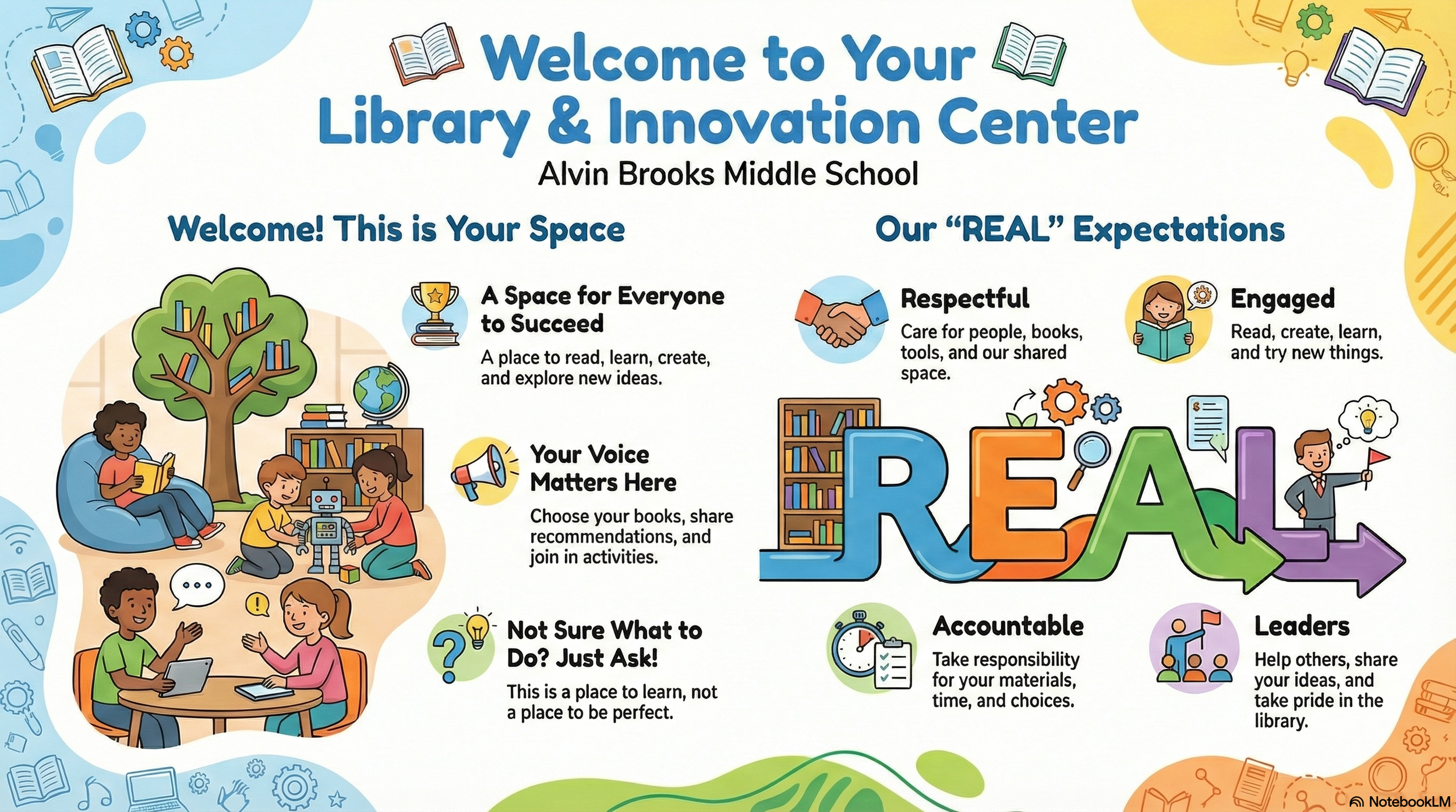
The first days in the library are about helping students understand what this space is and how it works. We talk about how to move through the library, how to use materials, how to treat each other, and what it means to share a learning space.
This infographic is used at the beginning of the year to introduce our REAL expectations in a way students can see and remember. It connects behavior, responsibility, and respect directly to how we use the library every day.
Once students know the routines and expectations, they relax. They know what to do here. That confidence shows up all year in how they move through the space, ask for help, and take ownership of their learning.
Collection Design & Genrefication
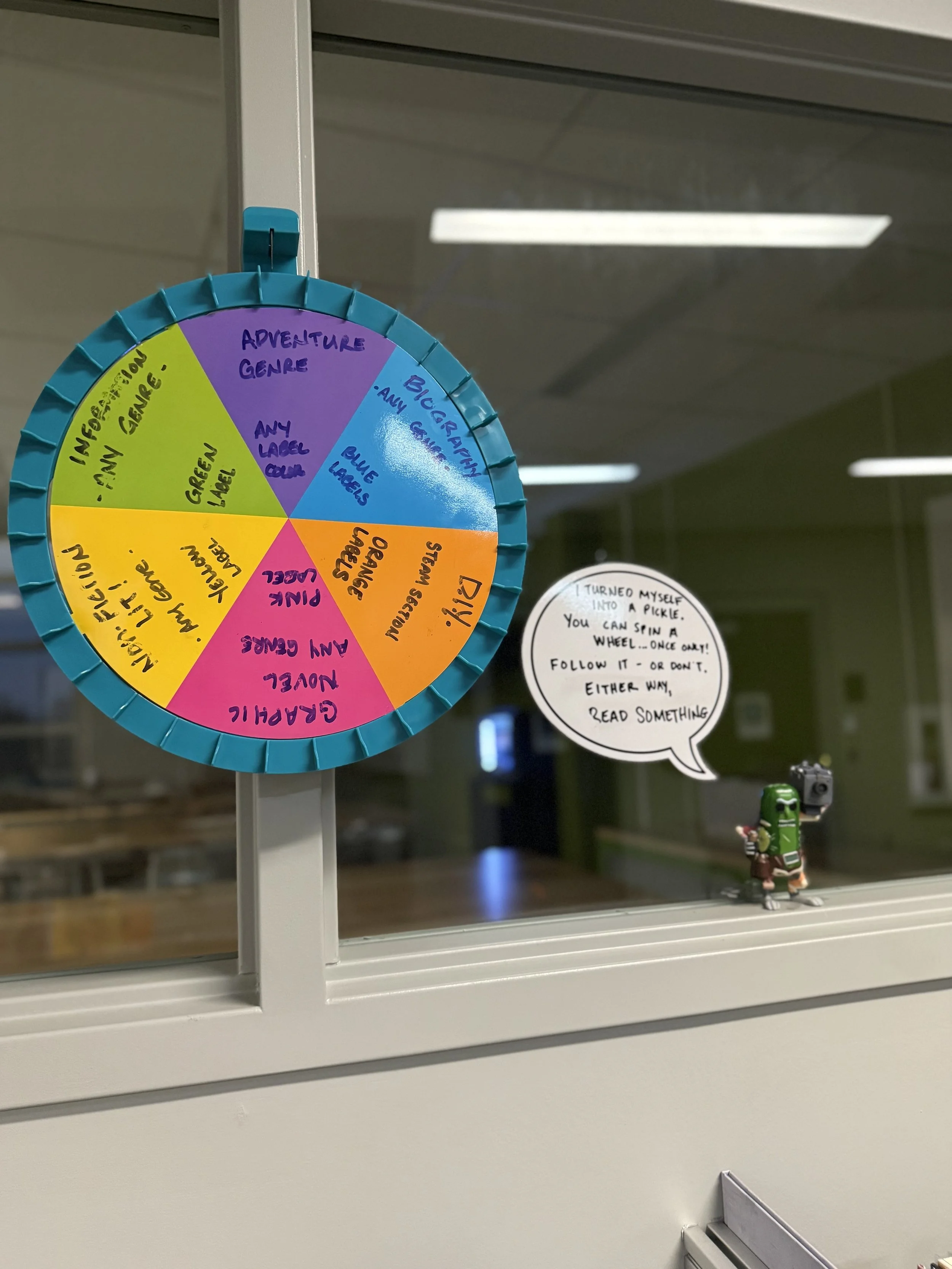
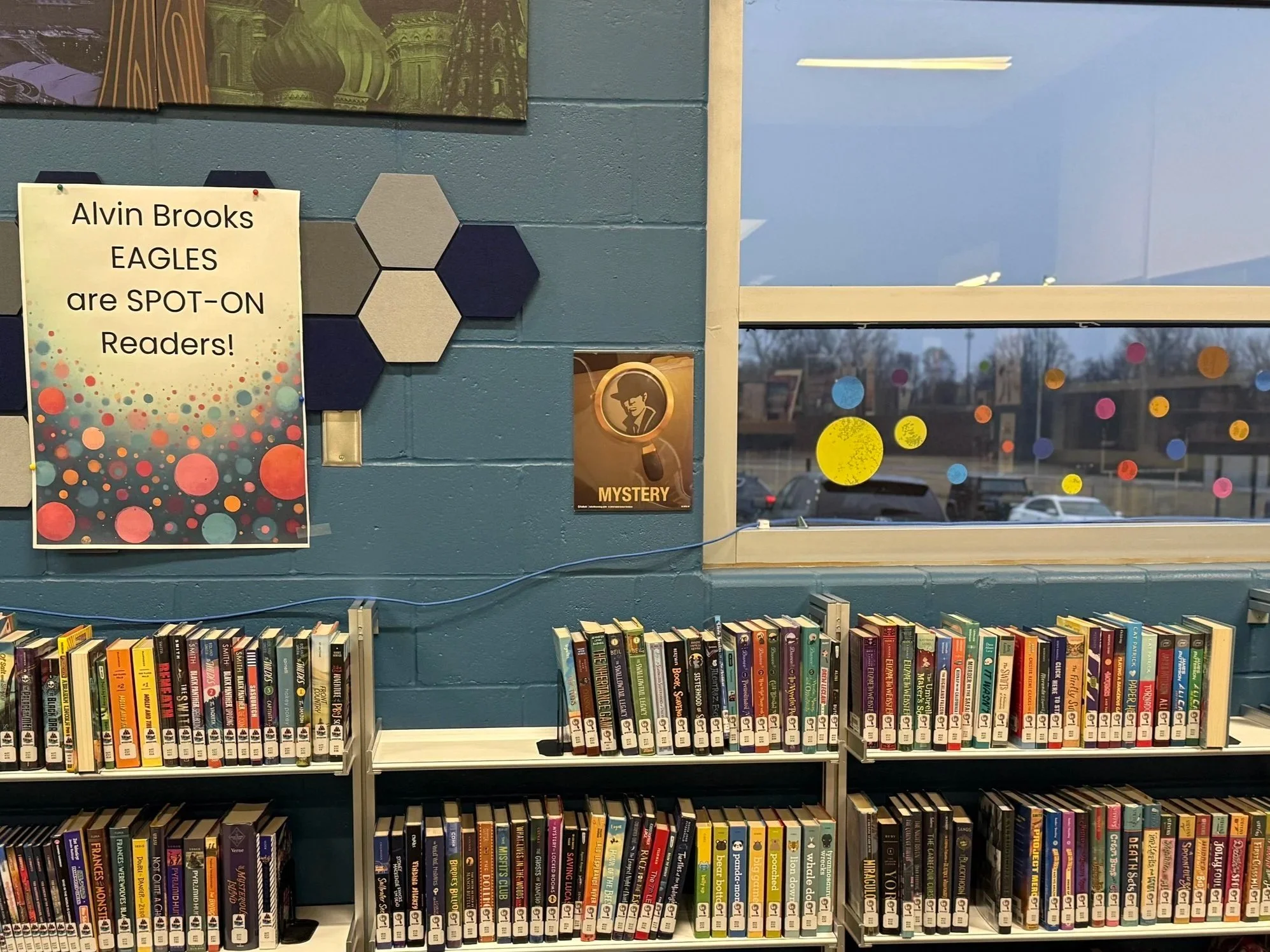
The way books are organized matters. Genrefying the collection helps students find books quickly, browse independently, and make reading choices without feeling overwhelmed.
Students don’t need to know a catalog system. They need clear sections, familiar labels, and the freedom to explore. This structure supports choice reading, helps reluctant readers find an entry point, and allows students to build reading identities over time.
The collection is adjusted regularly based on what students read, request, and talk about. Their interests shape the shelves.
Student Voice & Choice
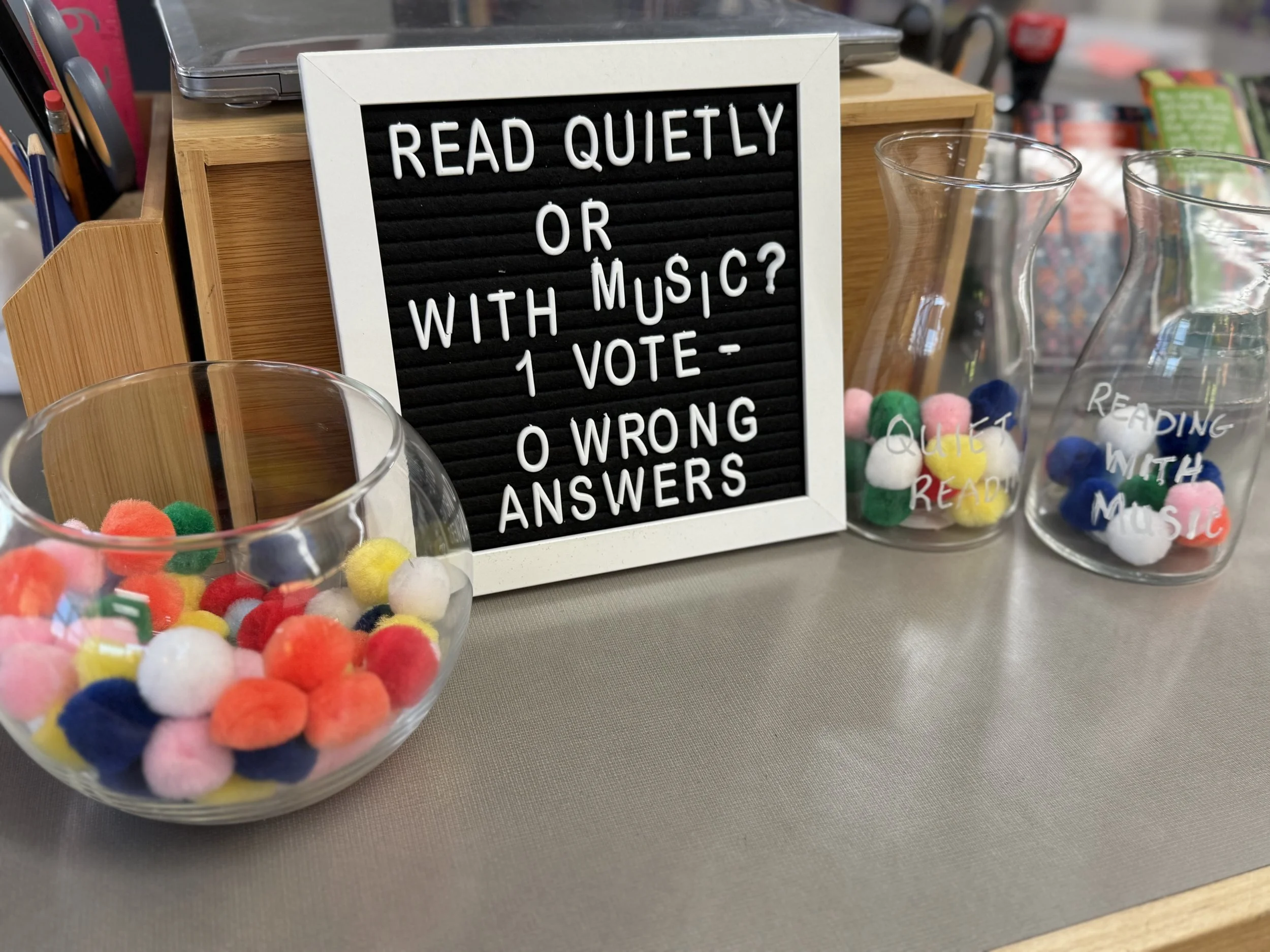
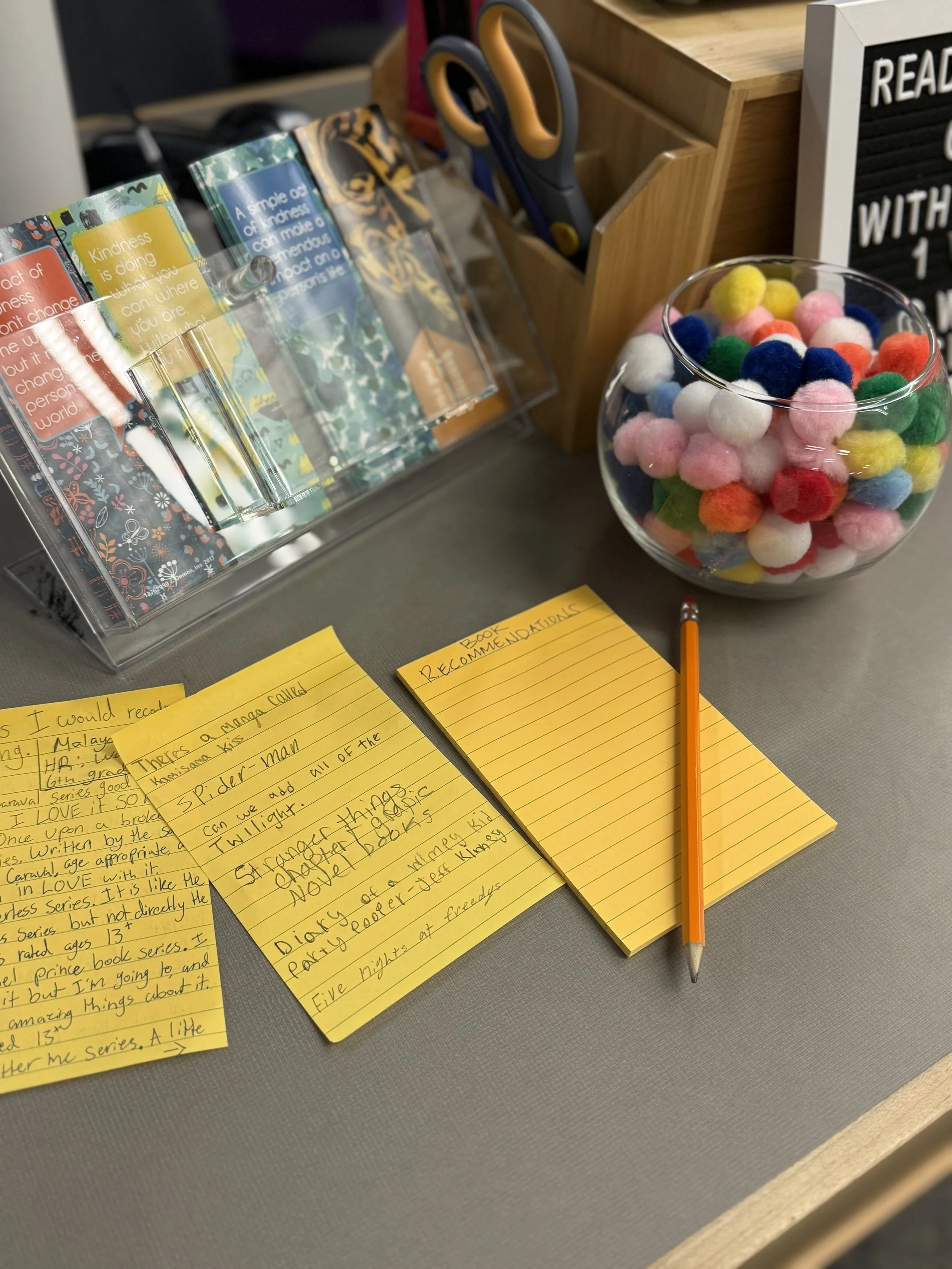
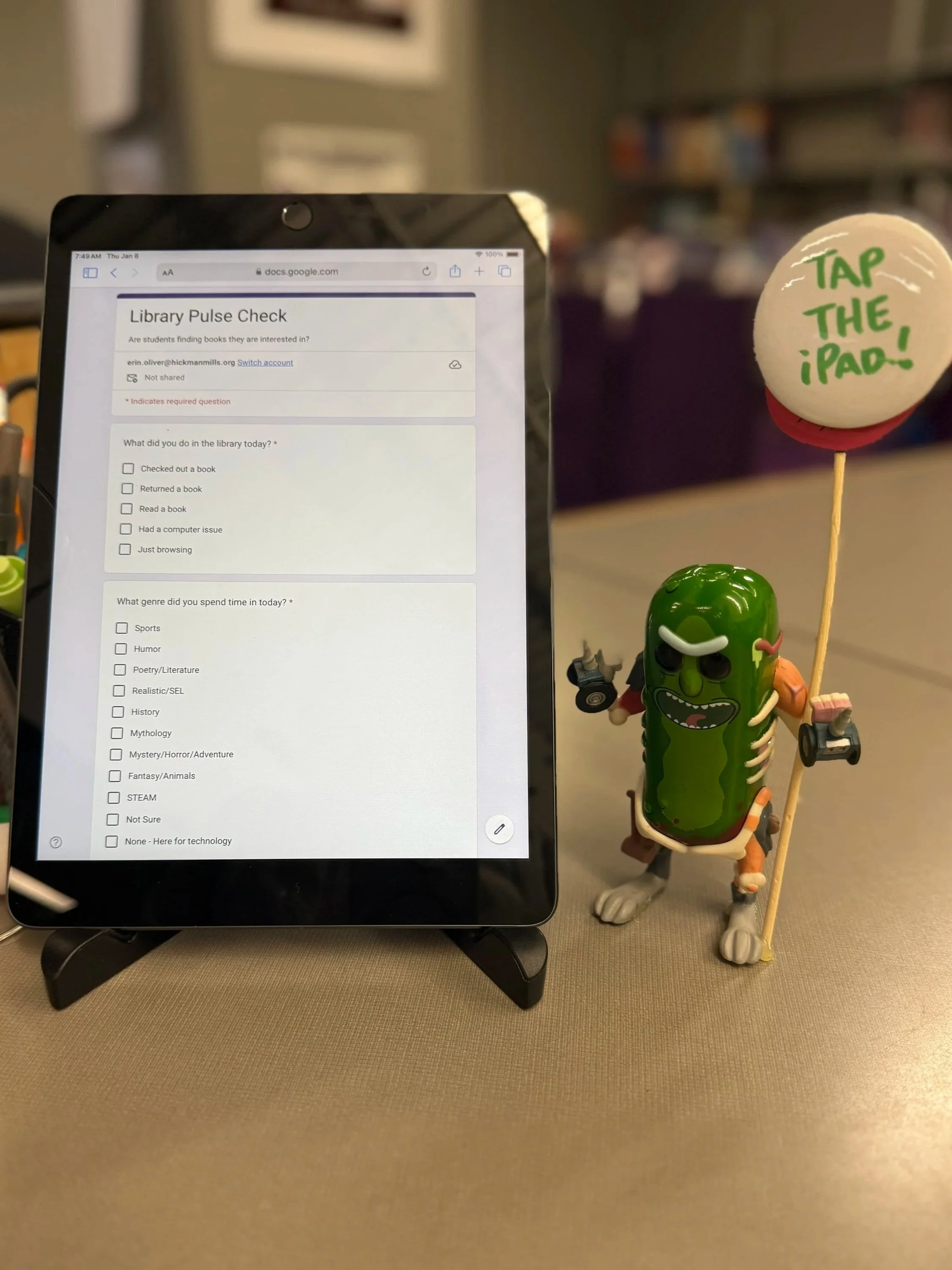
Students have regular opportunities to influence what happens in the library. They suggest books, help with displays, vote on activities, and share feedback about what they want this space to be.
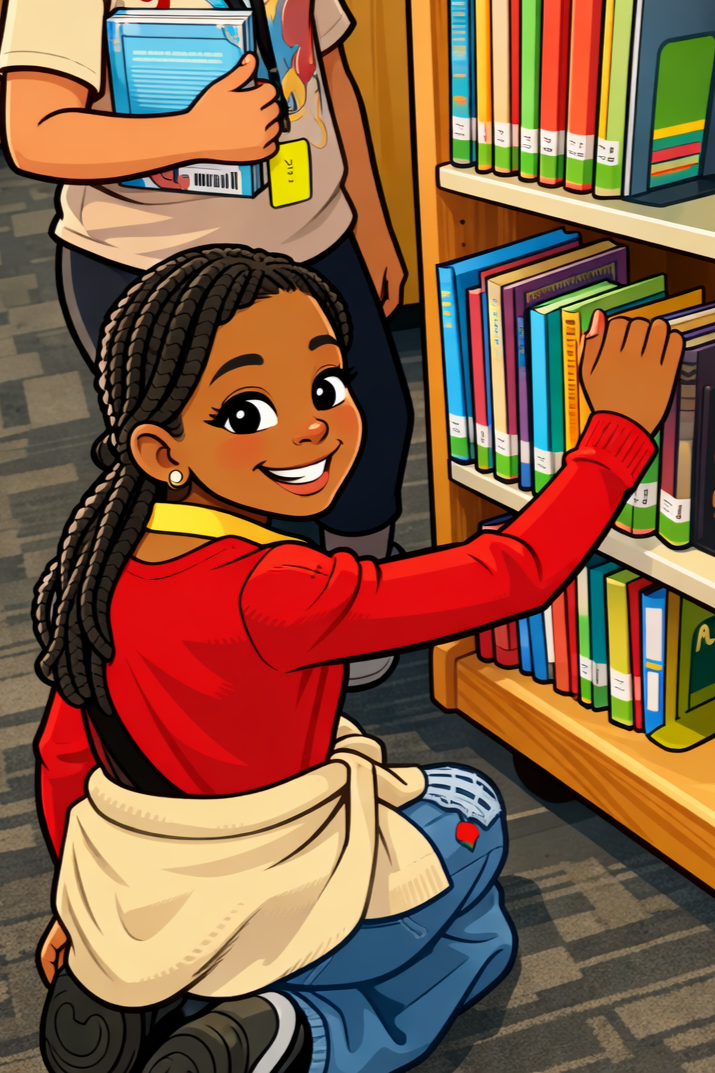
Choice also shows up in how they use the library. Students decide what to read, where to sit, how to spend their time, and which materials to use. These small choices build confidence and help students feel ownership over the space.
Everyday Student Engagement in the Library
Student engagement here doesn’t come from big events. It comes from small, consistent experiences that happen every day.
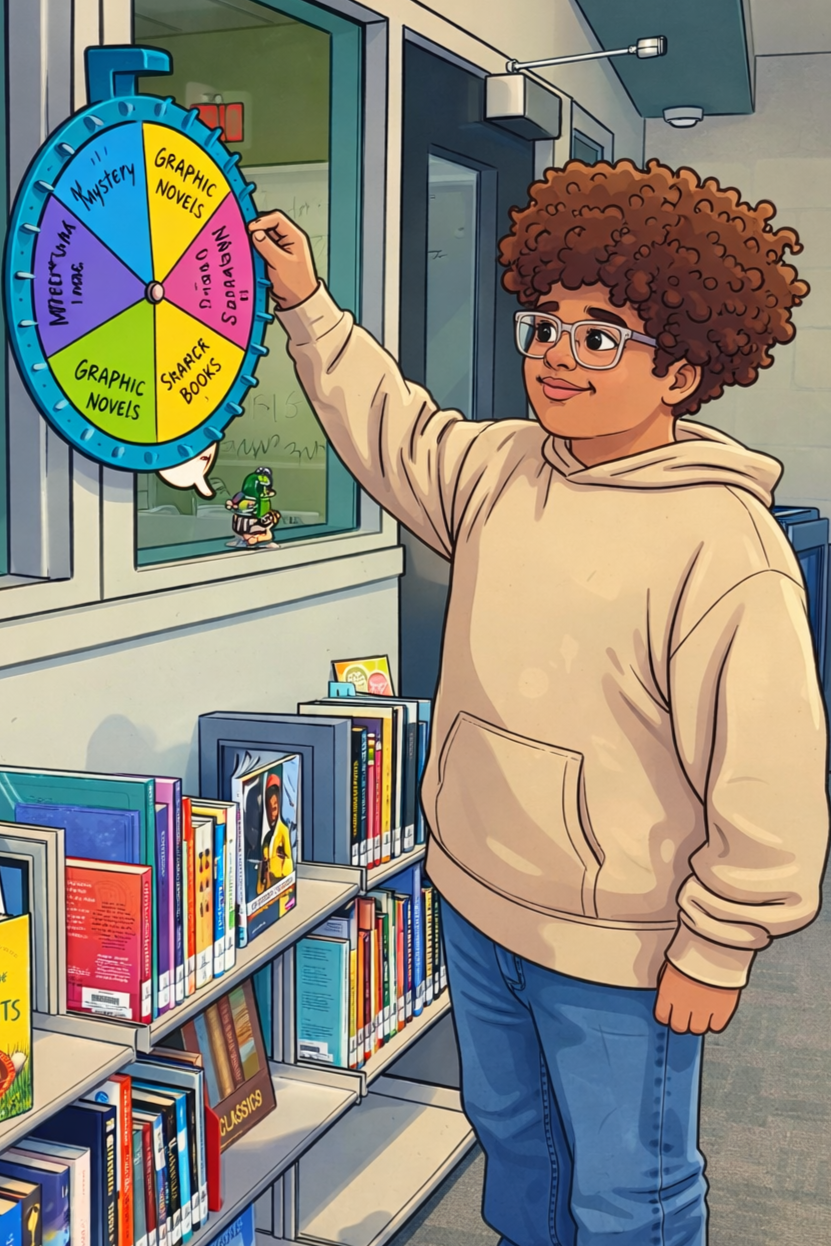
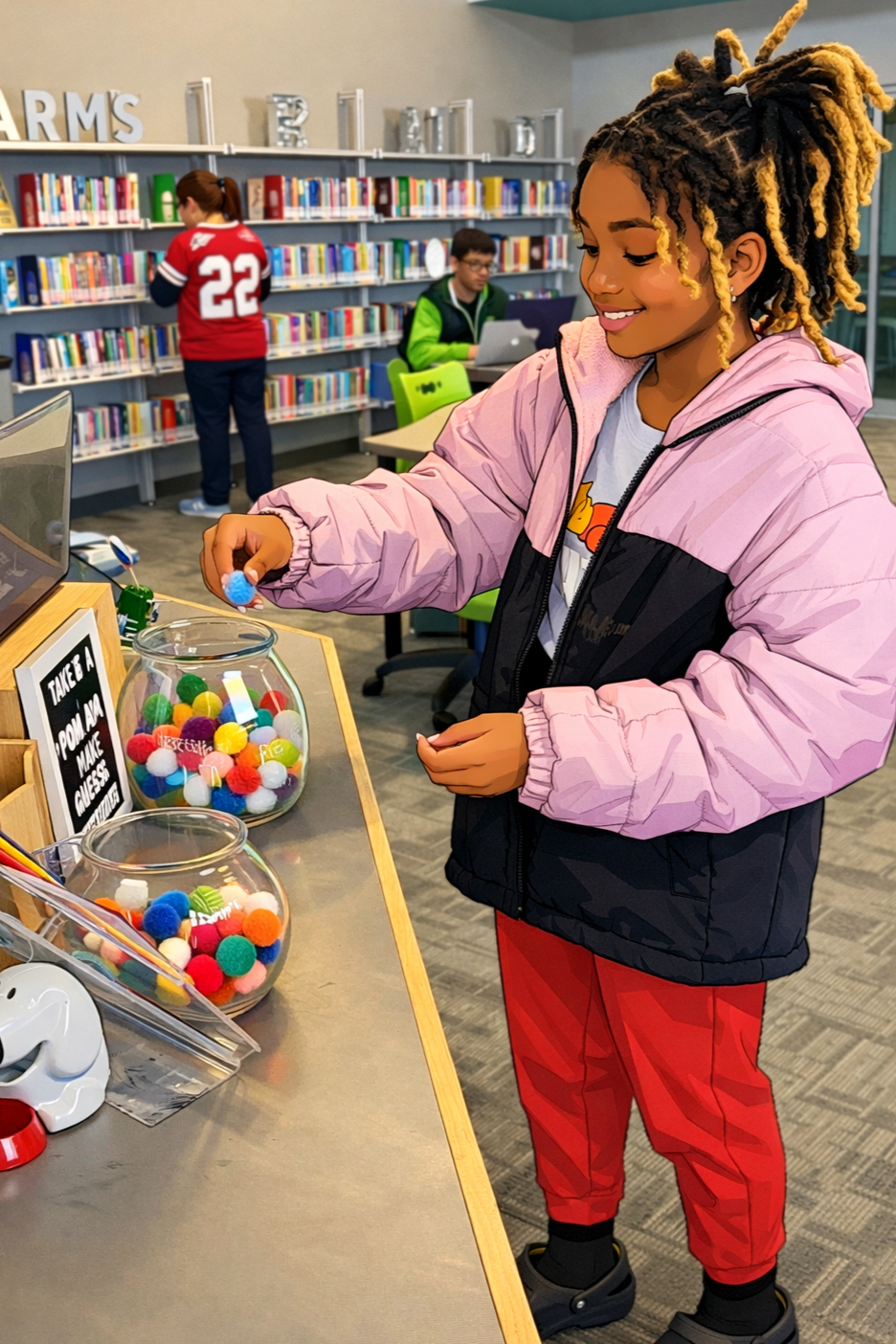
Book displays, voting jars, quick activities, and informal conversations about reading all give students reasons to pause, look around, and interact with the space. These moments make reading feel social and visible instead of quiet and isolated.
Student Ownership
When students feel like the library belongs to them, they take care of it. They return materials correctly, help each other, and follow routines without reminders.
They also contribute ideas. Students suggest improvements, recommend books, and notice when something needs attention. Over time, they stop acting like visitors and start acting like members of the space.
Student Leadership
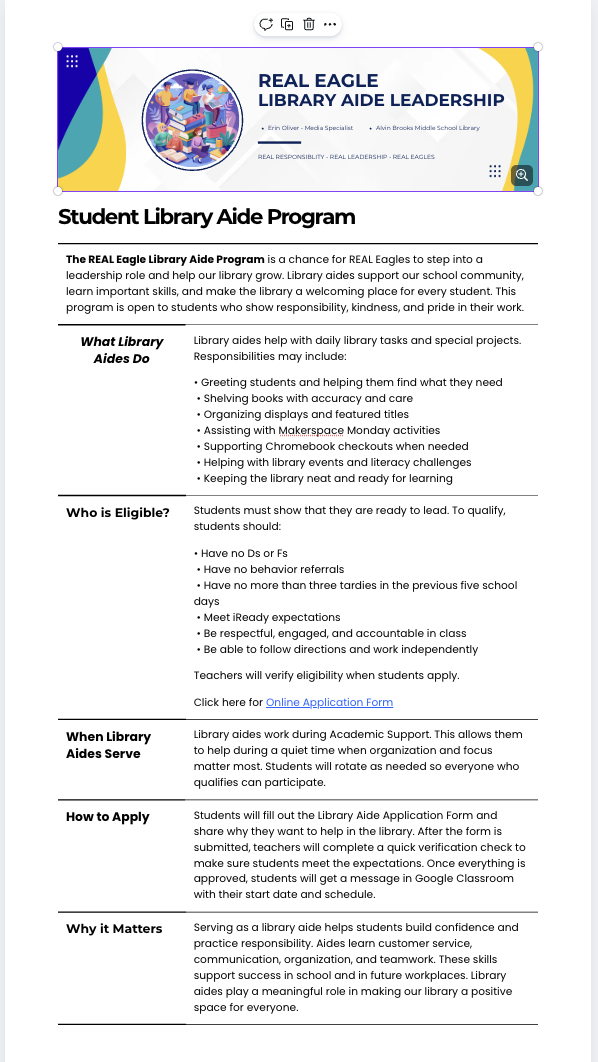
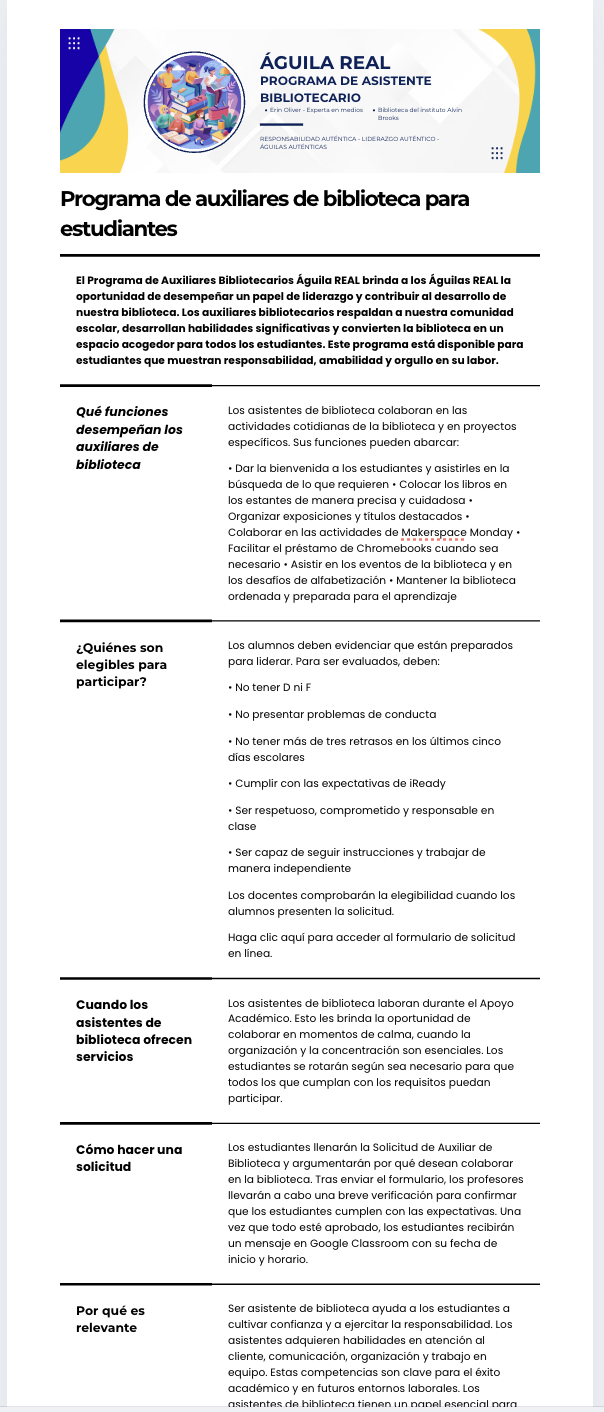
The student library aide program gives eighth graders real responsibility in the library. They help with daily operations, support younger students, and learn how to manage materials and time.
Clear routines and expectations allow students to take this role seriously. They practice communication, problem-solving, and follow-through in a real setting with real responsibility.
Many students grow into this role over time. What starts as helping becomes leadership.