Research & Inquiry in Today’s Classrooms
Research and inquiry are still essential parts of learning, but the way students access information has changed. With AI tools and instant answers readily available, students can complete assignments without engaging in much thinking. This is not new. Students have always looked for shortcuts. It does mean we have to be more intentional about how research experiences are designed.
Instead of focusing primarily on the final product, I help teachers design research and inquiry in ways that make thinking, questioning, evaluating, and reflecting the most important part of the work.
As a Library Media Specialist, I partner with teachers to build the instructional structure that makes this possible in real classrooms.
Designing Research With Student Thinking at the Center
When a teacher brings me a unit that includes research or inquiry, I support the work with student planning templates and a clear sequence of inquiry checkpoints. I provide reflection and revision tools, curated resource collections, and short mini-lessons that target specific research skills at the point students need them. I also share structures that guide thoughtful and ethical use of AI, along with teacher-facing guides and rubrics that make the process manageable.
Instructional Supports for Teachers
Many teachers are asked to include research and inquiry in their instruction but are often working within pacing guides or scripted curriculum that leave little room to design those experiences from scratch. My role is to collaborate with teachers by building the research framework that fits inside their existing units.
Rather than teaching a single library lesson, I help design the structure that supports the entire inquiry process from beginning to end. Over time, this helps teachers feel more confident leading research experiences because the supports are already in place.
The following projects show how this framework looks in practice across grade levels and content areas:
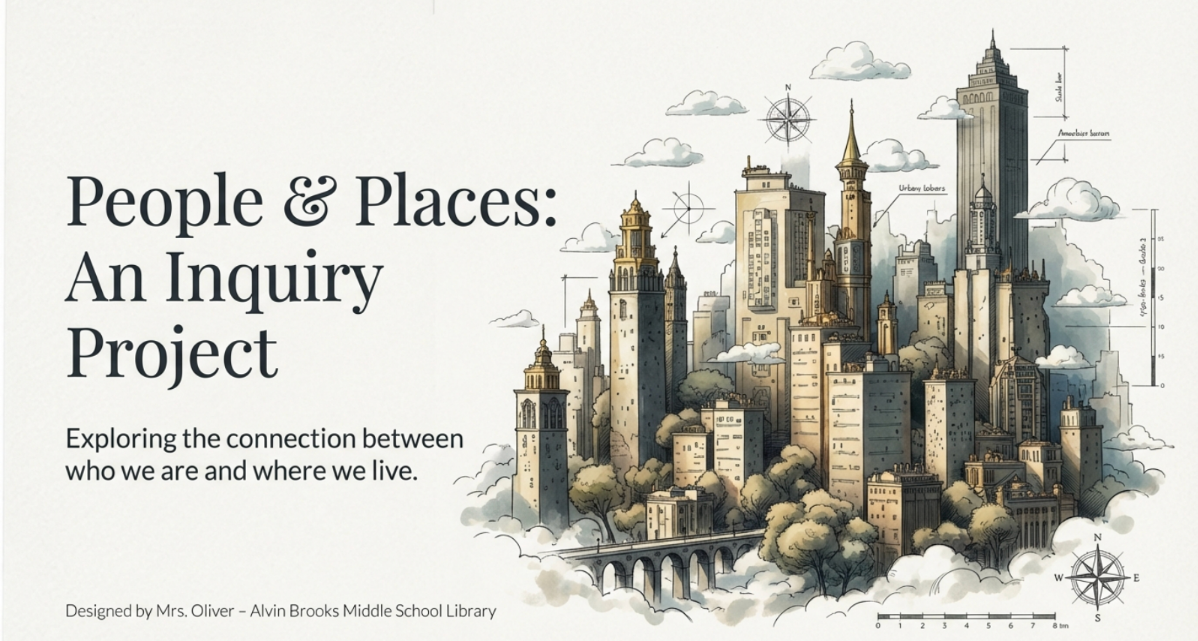
Click image to view project slides
Inquiry in Practice: 6th Grade
People and Places
This project shows how I structure research and inquiry so that students can move through the process with support while still having room for curiosity and choice. Although the topic changes from project to project, the overall structure remains the same. Students plan their work, move through checkpoints, learn specific research skills along the way, and reflect on what they are learning before creating a final product.
Students began by choosing a person or place they were genuinely interested in learning more about. Before they started researching, they spent time narrowing their focus, generating questions, and thinking about what they already knew. This planning step helped them enter the research process with purpose instead of simply searching for information.
As they worked, students did not move straight through to a final product. They paused at several points to share their questions, notes, and thinking. These checkpoints helped slow the process down in a productive way and kept students from relying on the first source they found or jumping to conclusions too quickly.
Throughout the project, I provided short, targeted lessons on finding sources, evaluating credibility, organizing information, and using evidence to support their ideas. These lessons were timed to match exactly where students were in their work, so the support felt practical and immediately useful.
Students were encouraged to reflect and revise as their understanding grew. The goal was not to produce a perfect project, but to build confidence in their ability to research thoughtfully and explain what they had learned.
By the time students reached their final product, they were not simply sharing information. They were demonstrating what they understood and how they had made sense of their learning using evidence from their research.
Artifact links
Inquiry Project Overview (slide deck)
Student Presentation Choice Board (slide deck)
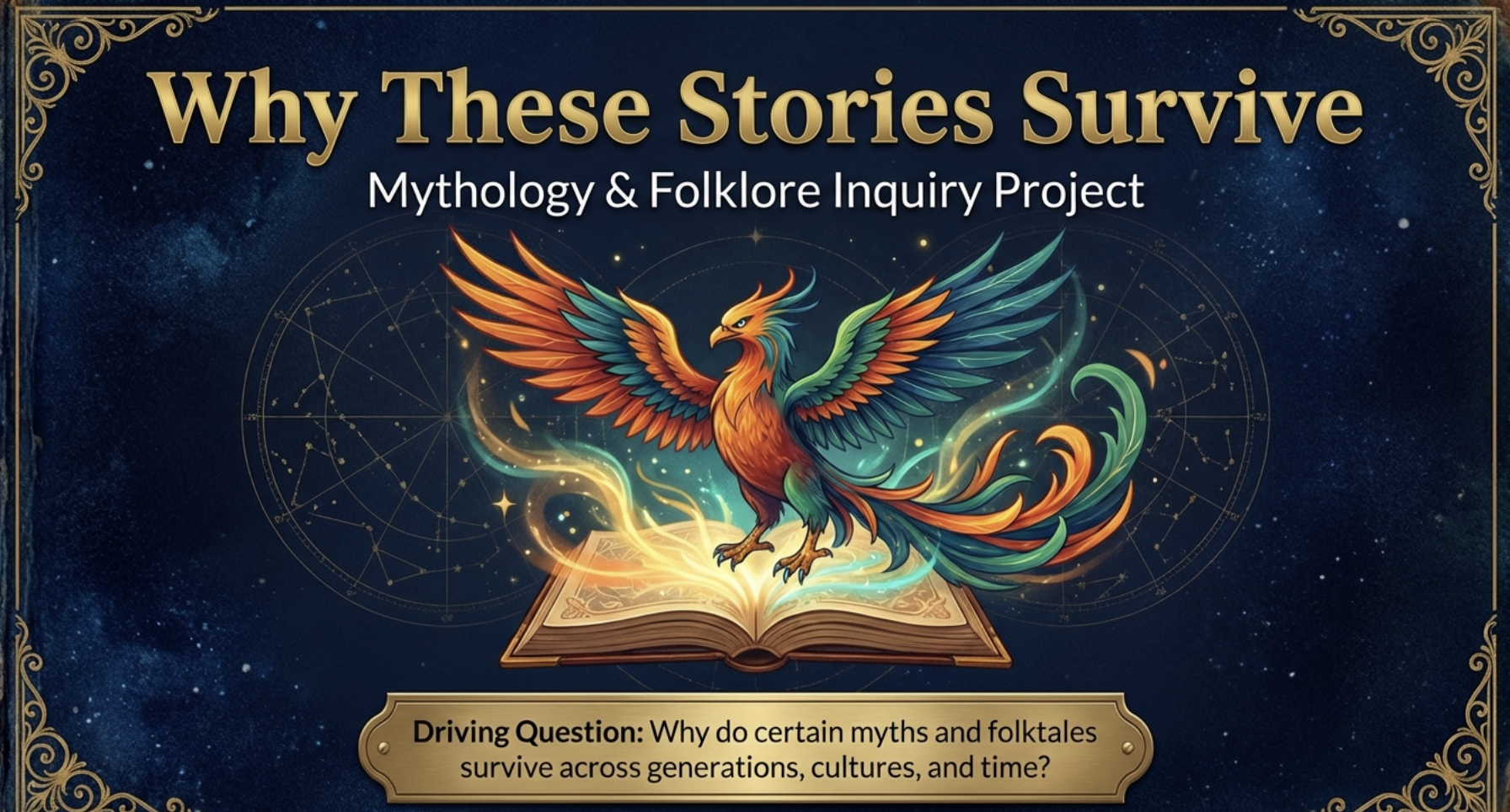
Click image to view project slides
Inquiry in Practice: 7th Grade
Echos of the Past: Why These Stories Survive
This project shows how I structure research and inquiry so that students can move through the process with support while still having room for curiosity and choice. Although the topic changes from project to project, the overall structure remains the same. Students plan their work, move through checkpoints, learn specific research skills along the way, and reflect on what they are learning before creating a final product.
Students began by selecting a topic connected to our content that they were genuinely interested in exploring more deeply. Before they started researching, they completed a planning sheet where they narrowed their focus, generated guiding questions, and considered what they already knew. This step helped students approach research with purpose instead of simply searching for information.
As they worked, students did not move straight through to a final product. They paused at several points to share their developing questions, notes from sources, and decisions about which information was most important. These checkpoints slowed the process down in a productive way and helped prevent students from relying on the first source they found or copying information without thinking about it.
Throughout the project, I provided short, targeted lessons on skills students needed in that exact moment. These included how to locate reliable sources, how to evaluate credibility, how to organize notes in their own words, and how to use evidence to support their ideas. Because the lessons matched where students were in the process, the support felt practical and immediately useful.
Students were encouraged to reflect and revise as their understanding grew. They adjusted their questions, refined their focus, and reconsidered how they wanted to present their learning. The goal was not to produce a perfect project, but to build confidence in their ability to research thoughtfully and explain what they had learned.
By the time students reached their final product, they were not simply sharing information. They were demonstrating what they understood and how they had made sense of their learning using evidence from their research.
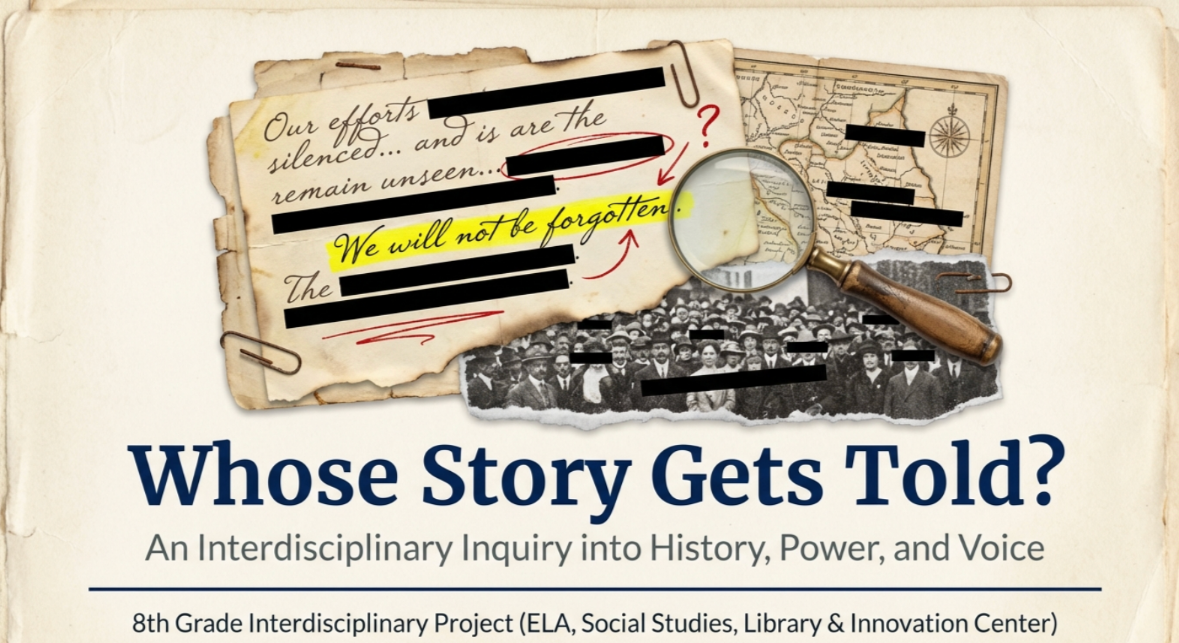
Click image for full slide presentation
Inquiry in Practice: 8th Grade
Whose Story Gets Told?
This project was designed to help students think critically about history by examining how power, perspective, and voice shape the stories we tell. Students investigated a U.S. historical event covered in their social studies curriculum and analyzed how different sources presented the same event.
Students began by selecting an event and completing a planning process where they identified what they already knew, what they wanted to understand more deeply, and the questions that would guide their research. This early step helped students move into the inquiry with purpose rather than simply searching for information.
As they worked, students moved through a series of checkpoints where they shared notes from both primary and secondary sources, discussed patterns they were noticing, and considered how perspective influenced what was included and what was left out. These pauses in the process helped students slow down, look closely at their sources, and avoid accepting a single narrative at face value.
Through library-led research lessons and guided analysis, students learned to identify bias, author purpose, and omissions. Writing instruction focused on building evidence-based claims and supporting those claims with carefully selected sources. Students revised their thinking as they encountered new information and refined their understanding of the event they were studying.
Choice played an important role in the final phase of the project. After completing a required written analysis, students selected a creative or digital format to communicate their findings. Options such as podcasts, visual timelines, monologues, or digital presentations allowed students to demonstrate understanding while practicing authentic communication skills.
Throughout the project, reflection, peer feedback, and revision were built into the process. The emphasis remained on thoughtful inquiry rather than speed or surface-level answers. This project reflects my approach to research and inquiry: structured support, meaningful choice, and a focus on helping students become careful readers of both texts and history.