Leadership & Professional Practice
Leadership Snapshot
I see leadership in the library as shared work. My role is to build the systems, routines, and supports that help teachers teach well and students learn with confidence. The library is an instructional space where clarity, collaboration, and high expectations are part of the daily experience.
What This Looks Like Day to Day
Instructional leadership in the library shows up in practical, consistent ways:
Planning lessons, projects, and research experiences with teachers
Supporting curriculum through resource curation and instructional design
Partnering with ELL staff to ensure multilingual learners can access grade-level work
Creating instructional supports that reduce barriers while keeping expectations high
Designing and facilitating professional learning focused on student engagement and instructional clarity
REAL in the Library

Click image to enlarge
REAL expectations shape how students experience the library each day. As a shared learning space serving the whole building, the library runs on clear routines that support respect, engagement, accountability, and leadership.
Respect shows up in how students move through the space, work with peers, and use materials responsibly. Expectations are taught, modeled, and reinforced with consistency and fairness.
Engagement comes from instructional design and programming that reflect student interests, academic needs, and cultural relevance. Students participate actively and take ownership of their learning.
Accountability is built through shared responsibility for the space and its systems. Students understand what is expected and are supported in meeting those expectations through clear communication and follow-through.
Leadership grows as students take on real responsibility. Library aides, student leaders, and collaborative projects give students opportunities to practice decision-making, problem-solving, and teamwork in meaningful ways.
These structures make the library a place where students learn not only content, but how to work, contribute, and lead.
Staff Resource & Instructional Leadership

Click image to enlarge
An instructional coach highlighted my work on the district AI leadership team after I created and shared a NotebookLM resource for staff. This work focused on helping teachers understand how AI tools can support responsible use, classroom integration, and professional learning.
Instructional Tech Professional Development
Click image to see full slide deck.
Curated Tools for Middle School Classrooms
I regularly curate and share instructional technology tools with teachers, focusing on practical classroom use rather than novelty. This resource grew out of teacher questions about flexibility, accessibility, and clear instructional purpose.
The collection highlights tools that support formative assessment, student voice, collaboration, and multimedia creation. Each tool is selected to help teachers solve real classroom challenges and invite meaningful student engagement.
This resource is designed to be practical. Tools are added, revised, or removed based on instructional need and student response. Teachers use it when planning lessons, projects, and assessments that meaningfully incorporate technology.
Instructional Support for Teachers
Click image for full resouce.
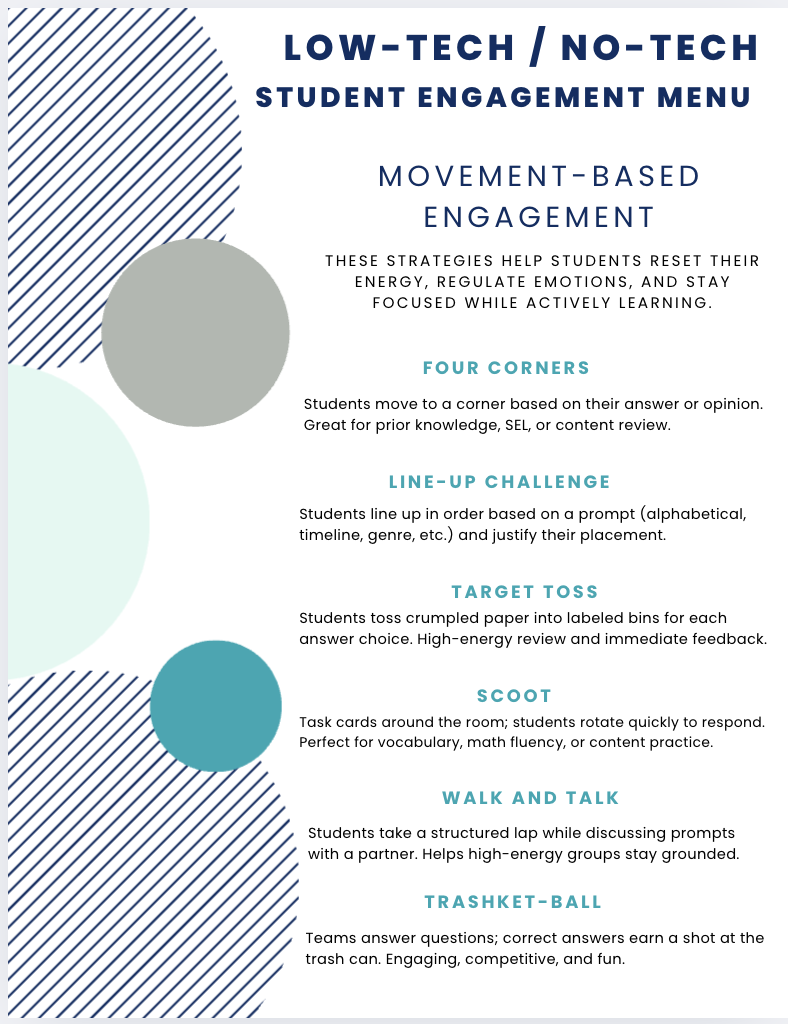
In addition to working directly with students, I support teachers by sharing strategies they can use immediately in their classrooms. This resource was created in response to conversations with teachers about participation, movement, and discussion.
The menu offers flexible strategies that encourage student thinking, collaboration, and reflection without adding extra planning demands. Teachers can adapt these ideas across content areas and grade levels to increase engagement and deepen learning.
This work grows out of day-to-day collaboration and listening to what teachers need. The goal is to support instruction in ways that feel useful, respectful of time, and grounded in real classroom practice.