Quarter 3 Literacy Challenges
To support digital literacy as a set of transferable, real-world skills, I designed and implemented an eight-week Literacy Challenge during Quarter 3. The challenges were intentionally flexible and delivered through Google Classroom so students could participate despite schedule changes, weather closures, and schoolwide events.
The focus was on giving students consistent, low-pressure opportunities to practice essential literacy skills on their own while still feeling connected to the library and the work happening there.
Program Structure and Focus
Media literacy
Information literacy
Digital citizenship
Reading identity and student choice
How the Literacy Challenges Worked
The Literacy Challenges were designed to be simple, accessible, and sustainable. While some activities were supported during library visits, most were completed independently by students. This allowed for broad participation without requiring additional staffing or full-class instructional time.
The structure helped students build confidence, develop independence, and engage with literacy skills in manageable ways. It also allowed the program to continue consistently throughout the quarter, even when schedules shifted.
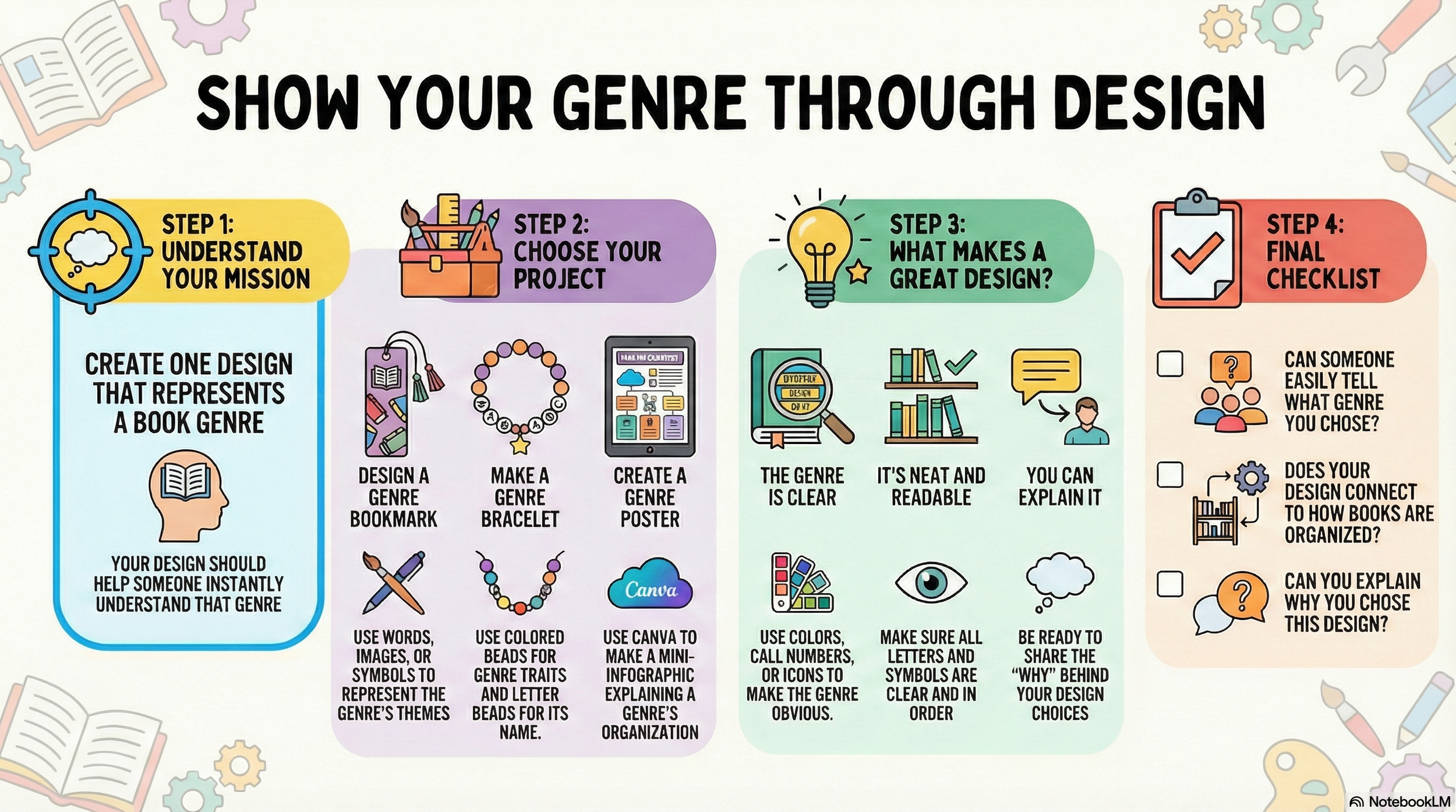
Literacy Challenge Extension: Genre Representation Through Design
This makerspace activity extended a Quarter 3 literacy challenge by asking students to represent a book genre through visual or symbolic design. Students chose to create a bookmark, friendship bracelet, or digital poster that communicated genre traits using color, symbols, call numbers, or organization systems found in the library.
The activity reinforced genre awareness, text organization, and reading identity while giving students choice in how they demonstrated understanding.
Signature Literacy Experience: February Book Speed Dating
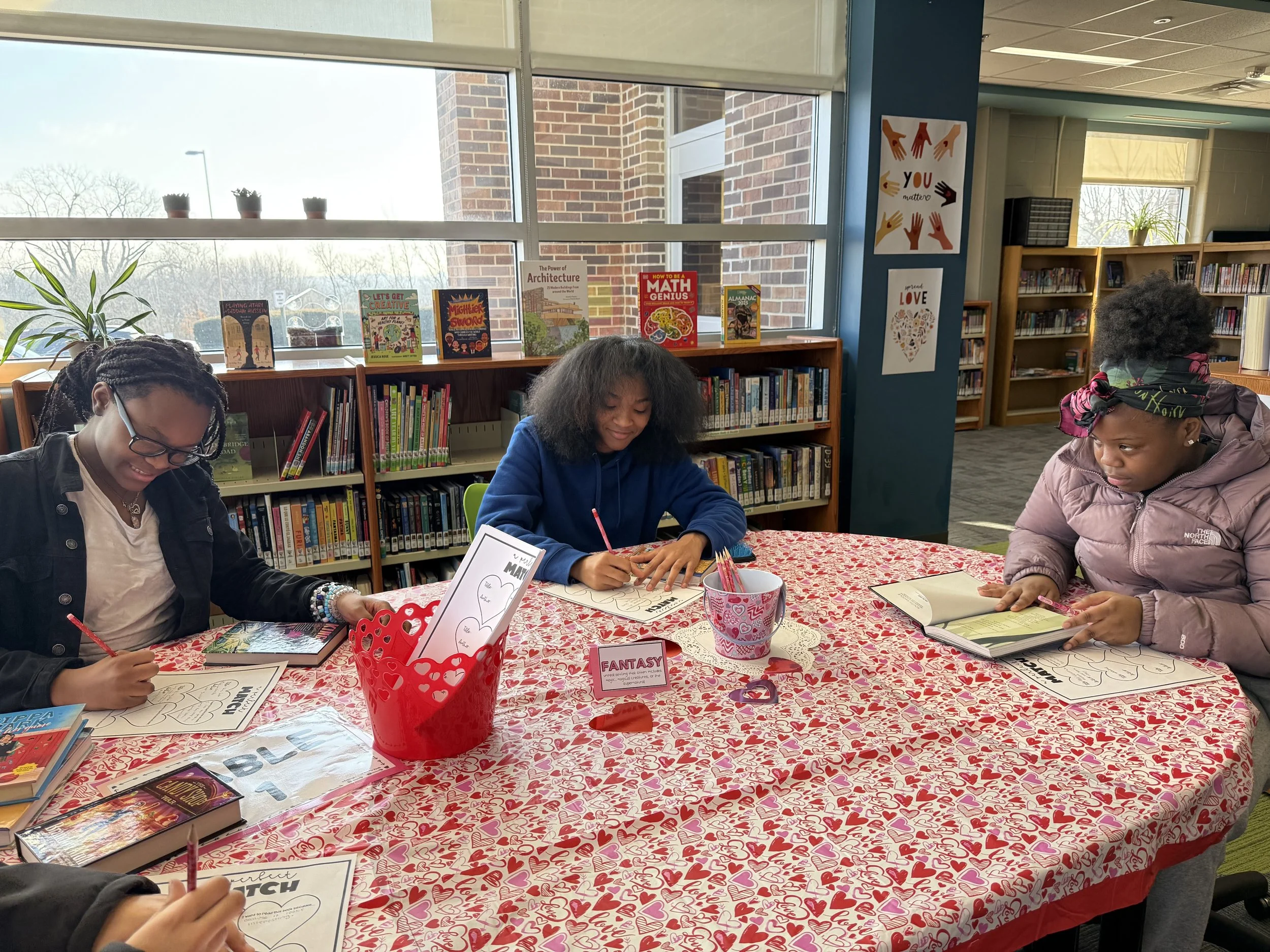
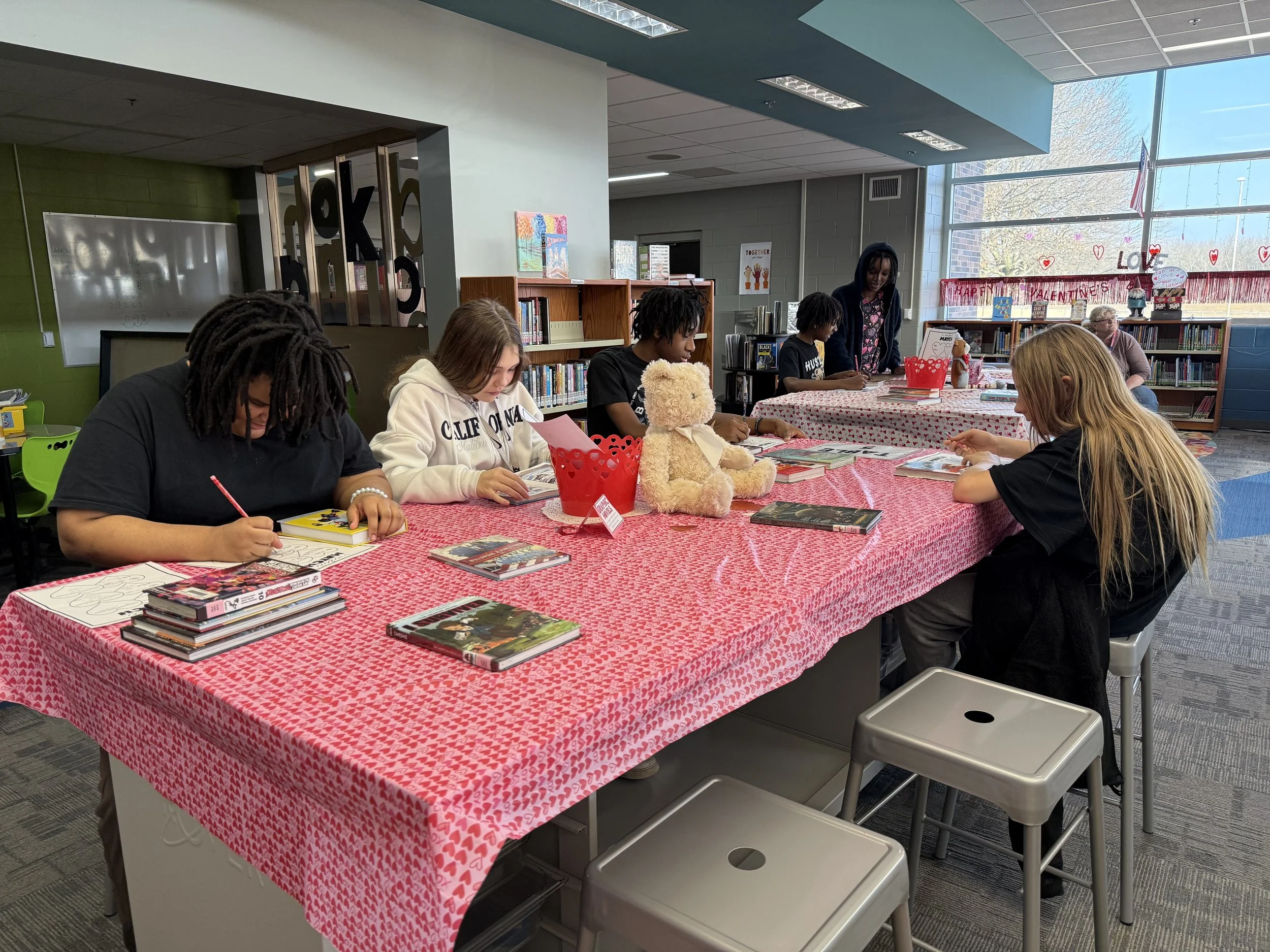
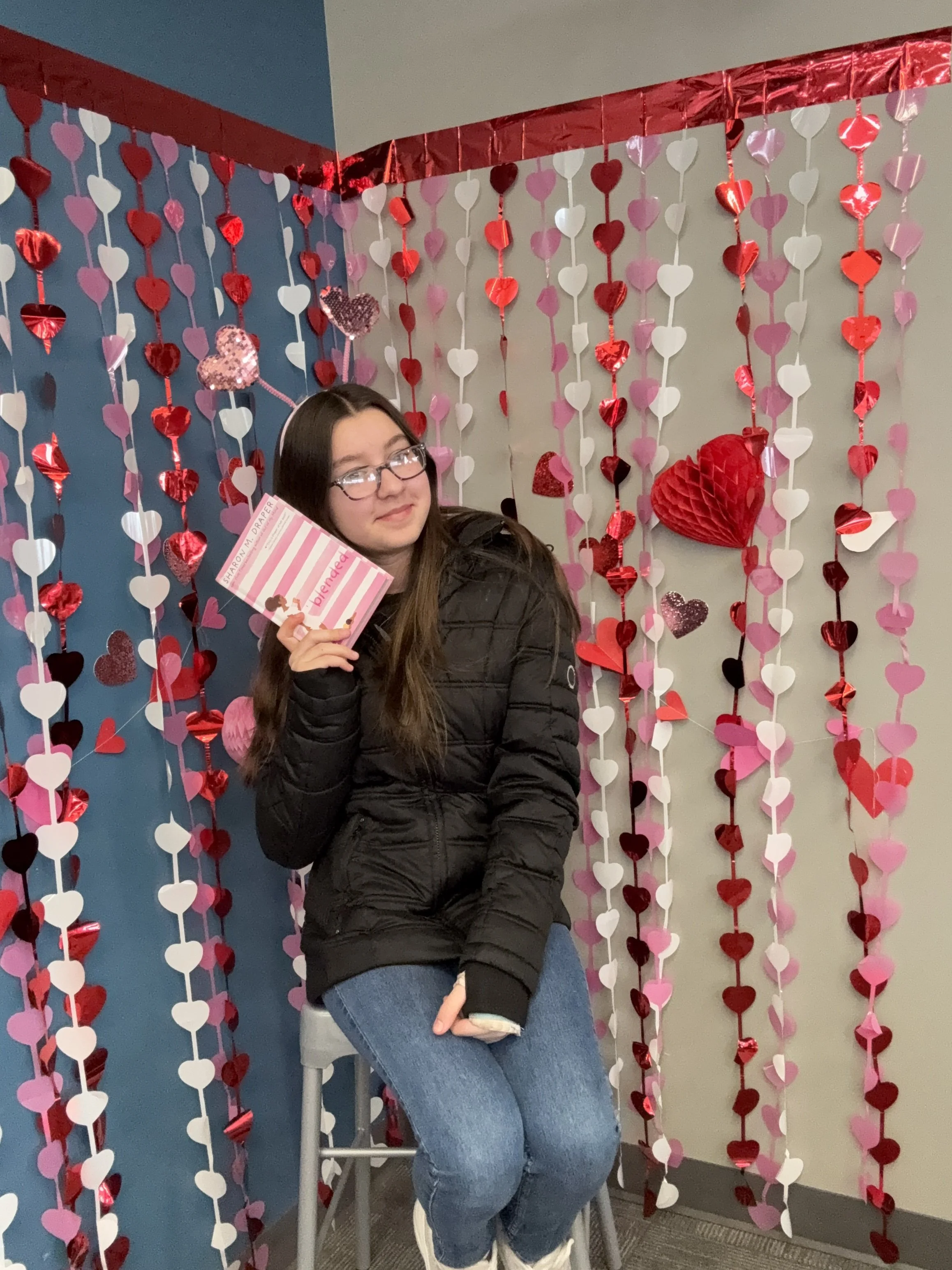
In February, I facilitate a Book Speed Dating experience as part of the Quarter 3 Literacy Challenges. All classes visited the library over two weeks in February, with flexibility built in for weather closures, conferences, and schedule changes. The goal was to give students time to explore books in a relaxed, low-pressure way and reconnect with reading as something personal.
Students moved through a wide range of genres, reflected on their preferences, added titles to their “Want to Read” lists in Destiny, and spent time engaging with the collection without the pressure of finishing a book or making a “right” choice.
To support student choice and celebrate reading identity, the library was organized into themed stations:
Black History Month Station
Graphic novels, fiction, informational texts, poetry, and biographies highlighting Black voices and experiencesSEL Station
Titles focused on emotions, relationships, identity, and personal growthSTEAM / DIY Station
Curiosity-driven nonfiction and project-inspired readingRomance
High-interest titles aligned with student demandQuick Reads / Hi-Lo / Novels in Verse
Accessible options that support reading confidence and staminaState Award Nominees
Exposure to quality, recognized literatureManga and Graphic Novels
Visual storytelling and highly engaging formats
This experience worked because it met students where they were. Some found a new favorite genre. Some discovered they actually liked reading more than they thought, and some just enjoyed the chance to browse, talk, and explore without pressure. That matters.